
What if the "Average" Student Was Never Average?
What if the "Average" Student Was Never Average?
What if the "Average" Student Was Never Average?
What if the "Average" Student Was Never Average?
What if the "Average" Student Was Never Average?
A story-driven, habit-forming learning system built around the student not the syllabus. Designed to unlock the potential that's
been sitting at 65% all along.
A story-driven, habit-forming learning system built around the student not the syllabus. Designed to unlock the potential that's been sitting at 65% all along.
A story-driven, habit-forming learning system built around the student not the syllabus. Designed to unlock the potential that's
been sitting at 65% all along.
A story-driven, habit-forming learning system built around
the student not the syllabus. Designed to unlock the potential
that's been sitting at 65% all along.

Class X has a quiet majority: students at 60–70% who are capable of 80–90%, written off as "average." Our first answer, a fully built game-first product, never shipped. Research showed we'd misdiagnosed the problem: it was behavioral, not academic. As the Product Designer, I led the design of Eureka’s learning flows, interactive lessons, and practice experience from synthesizing research insights.
Role · Product Designer
Partners · Senior PD, Design Director, Product Leadership, CEO, Engineering, Content & Academics
91%
active learners (started at least 1 activity)
784
focused mins / active user / month
75
NPS
What if the "Average" Student Was Never Average?
A story-driven, habit-forming learning system built around the
student not the syllabus. Designed to unlock the potential that's
been sitting at 65% all along.

The Problem
The world decided who these students were
The largest, most under-served segment of Class X CBSE students is failed not by lack of effort, but by a mismatch between what the system offers and what they need. It shows up in low marks, dropped streaks, the silent guilt of parents, and the quiet resignation of students told for years that they are "average."
Everything built for them shared the same wrong belief.

Tuition centres offer structure, but it's topper-paced, expensive, and pressure-driven structure that punishes mistakes and leaves the middle behind. Ed-tech apps offer content: passive libraries that forget the student the moment the video ends.
Understanding The User
3 studies · 56 families · 7 cities · Tier 1 - 3 surfaced four recurring failure modes. Not one of them is an academic gap, they are behavioral and emotional, and they held across geography, score bands, and family background.
Four ways capable students fail and none of them
were academic.
Motivation that collapses
Initial zeal quickly gives way to avoidance, procrastination, and reliance on external pressure.
"I just want to be free at home and do Netflix and chill. If the homework is easy I do it myself. If it's hard I copy it next day in class"
Surface-Level Understanding
Rote learning creates an "illusion of understanding" that fails against application-based board questions.
"What I really like about this teacher is that he explains with real life examples. That's when I understand a concept in one shot!"
Internalized Self-Doubt
Years of being labeled "average" leave students convinced high marks are out of reach.
"I feel stressed and scared the night before and after the paper. I feel like I won't do well."
Enforced Consistency
Sub-90% students rarely maintain routines without external accountability.
"He wouldn't have studied if he was just given a portion and told to prepare he needed someone to sit, discuss, and check answers."
Parents were part of the loop, not a second audience.
Schools praise indiscriminately; tuitions report nothing. Parents see marks drop but can't see why, so anxiety converts into pressure and manual supervision, which feeds straight back into the student's avoidance.

"All the time the feedback is that the kid is wonderful and disciplined, even when the mark came down quite drastically. Tell me what should I do at home to help my child score better."
— Parent
The problem was never ability but the system around it.
Put the two halves together and the reframe is unavoidable: students aren't failing for lack of intelligence. Current systems are built exclusively for those who already have discipline, confidence, and internal drive. The four failure modes are the design brief. Everyone else had been solving for content; the evidence said to solve for motivation, understanding, confidence, and consistency.
Who we designed for
In two lines
The capable underperformer
Primary · Class X CBSE · Tier 1 – 3 ·
at 60–70%, aiming 80–90%
High capability, zero structure. Studies only when late-stage panic hits or when an adult literally sits beside them and forces execution.
The anxious parent
Secondary · deeply involved, often managing it alone
Highly competent but flying blind. Gets vague praise instead of diagnosis, so she builds her own trackers and becomes the enforcement system herself.


The Pivot (Initial Direction)
Our first answer was wrong: we built a game
Before Eureka became a learning system, it was a game-mechanics-first experience: characters, weapons, level
progression. It was a rational bet, passive video libraries had demonstrably failed this cohort, so V1 bet on the
opposite: making learning feel more like a game to build a habit of showing up.

V1: quest planning, a conquerable topic map, avatars and podiums. Fully designed and built.
Then we tested it with students, and it failed on three fronts:
Planning fatigue
4 of 5 students in our Bangalore study couldn't stick to a self-made timetable. Only the 97% scorer could.
Rewards felt disconnected
The weapons and characters felt functionally detached from actual academic milestones, confusing students rather than rewarding them.
It built the wrong habit
Educational content cannot be hidden behind flashy mechanics; it would build a habit of opening a game, not learning.
It was built but it never shipped.
The strongest design decision in this project was a deletion.
But it wasn’t easy. Months of research, exploration, and iteration had gone into the product. Starting over meant letting go of a lot of work and being willing to rethink what we had already built.


What we had to let go
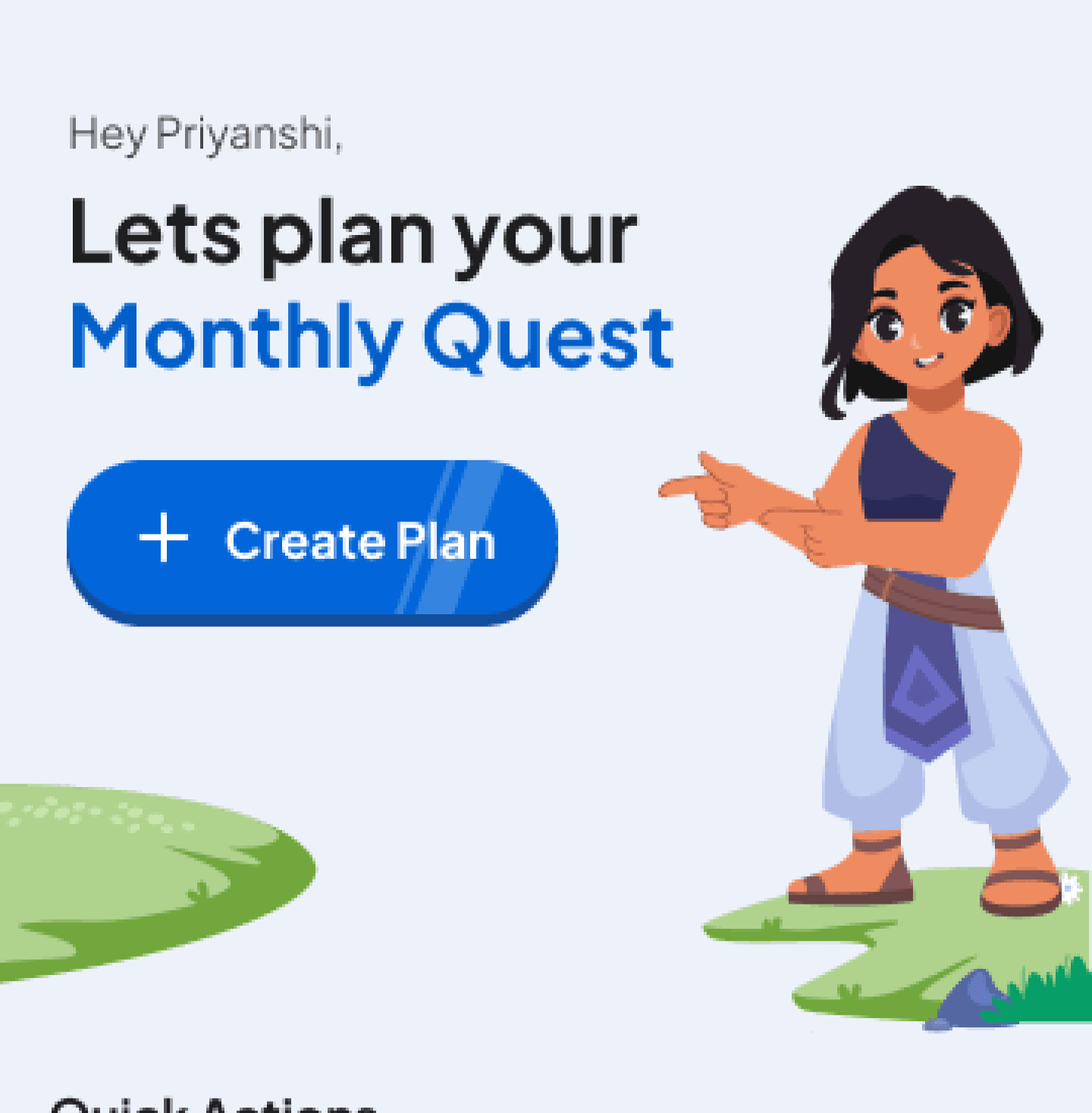
Plan creation
Planning created friction before
learning even began

Weapons reward
Students couldn't relate weapons to
achievement

Character and world concept
Leading with gamification builds
the wrong habit
I also explored bringing AI doubt assistance into video lectures. We dropped the concept not because of usability, but because the underlying AI capabilities weren’t ready.

Four Principles Failures Taught Us
Every design decision that follows traces back to one of these. Each principle was earned by a specific, observed failure, none of them came from a best-practice list.
Content first, mechanics second
Story-first content drives engagement. Gamification is a reward for learning, never the reason to learn.
Zero decision points
The target student is paralyzed by
choice. One "Continue Learning" CTA,
auto-advancing flow, no planning burden.
Psychological safety
Assessment must build confidence, not punish. No negative marking; a forward-looking scale that ends at "Board Ready."
Narrative before theory
Real-life stories build intuition first, so formal theory lands on familiar ground instead of bouncing off.
Making content the hero
Previously learning was competing with the reward mechanics, rather than being the reason students engaged. So, as we started rethinking the experience, one decision became clear across the team:
The content itself had to become the primary reason to engage.
To understand what a content-first experience could look like, we looked beyond ed-tech and studied products where content is the product like Netflix, Hotstar, Dice, and others.
A few patterns stood out:
Strong content hierarchy: the content takes center stage.
Immersive presentation: the interface gets out of the way.
Previews that create curiosity: users get a reason to explore before committing.
Minimal distractions: supporting UI stays secondary to the content.
The question then became:
How might we bring these principles into learning?
This led us to explore larger content surfaces, more immersive visual treatments, and previews that could pull students into the learning itself.
Exploring what content-first could feel like


The Solution: Eureka
Eureka is an active learning platform, not just a content library. It's a behavior system that uses great content as its delivery vehicle. The product thesis: when a learning experience is engaging, immersive, and emotionally rewarding, academic improvement is the natural byproduct of consistent engagement.

3 Stages of Learning
Each chapter has been divided into 3 stages: Learn → Master → Ace, designed along with Allen's academic team to take a student from first encounter with a concept to full board readiness, in a way that feels engaging rather than pressured.
Stage 1 (Learn): Stories that make it click
Each chapter opens as a narrative, with real-world hooks like "why does salt dissolve in water but oil doesn't?", told in short episodes, one subtopic each. By the time formal theory arrives, it's landing on familiar ground.


Story-first learning builds intuition before theory.


Each episode focuses on a single subtopic, making progress easier to follow.
Stage 2 (Master): Expert teaching that closes every gap
Once the story sets the stage, expert teachers build real depth. Stage 2 has three connected parts: concept videos, inline pop-up questions, and a concept quiz that turn intuitive understanding into board-ready knowledge. The student never just watches; they think and respond at every step.


Topic
Subtopic
Students progress one concept at a time, building mastery incrementally.
Concept videos: Each concept is taught by an expert teacher, board-aligned and gap-free, continuing the storyline from the Stage 1 episode so it feels like one experience, not two.


Pop-up questions: To break the "illusion of learning" from passive video, the interface is built for active recall. Timestamp-anchored multiple-choice questions interrupt passive streaming, catch confusion instantly, and give immediate feedback.


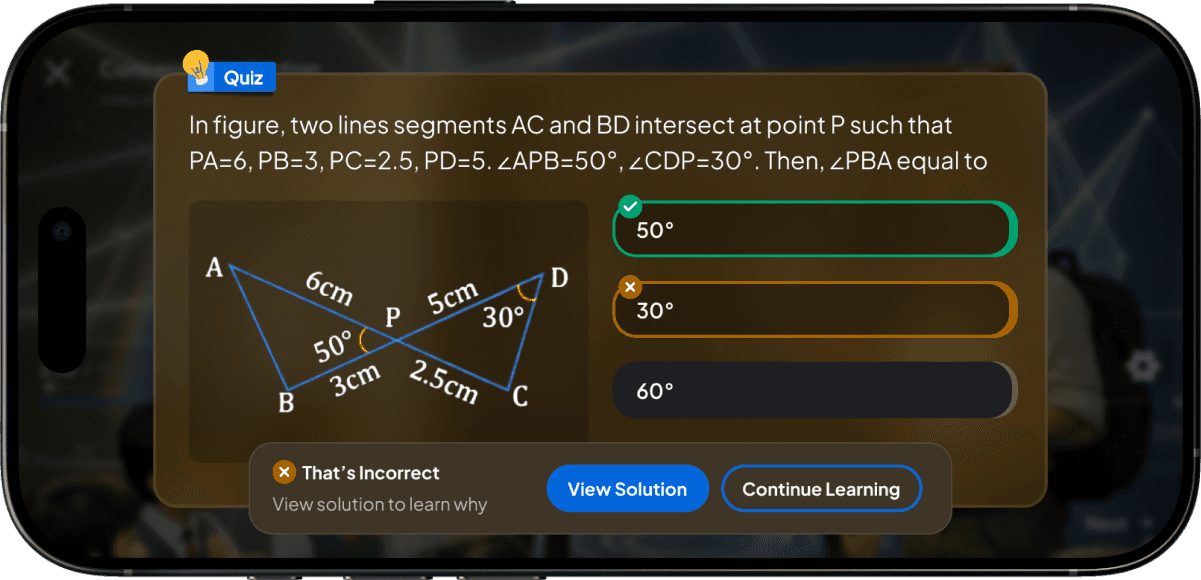
Concept quiz: Each concept ends with a short objective quiz. It is untimed with unlimited reattempts. A genuine attempt counts as progress regardless of score the quiz is part of learning, not a test of it.


Stage 3 (Ace): Robust Topic level Assessments
Instead of reinforcing exam anxiety, we designed a multi-tiered evaluation system that reframes testing as a constructive, forward-looking learning mechanism. Focusing on what is understood and what needs improvement. No negative marking. Best score retained on retries.
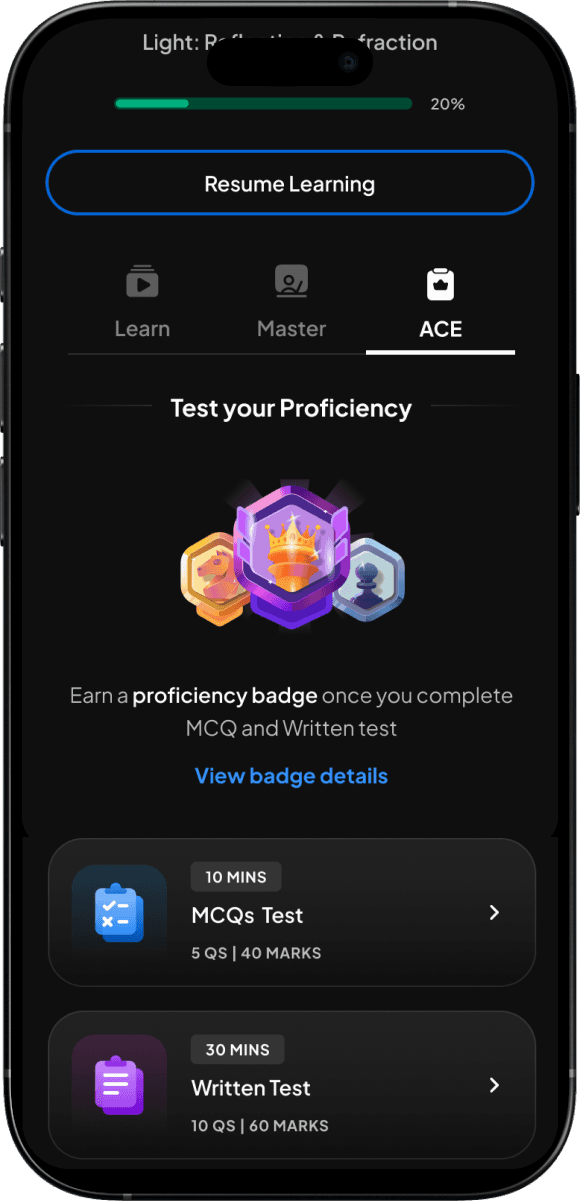
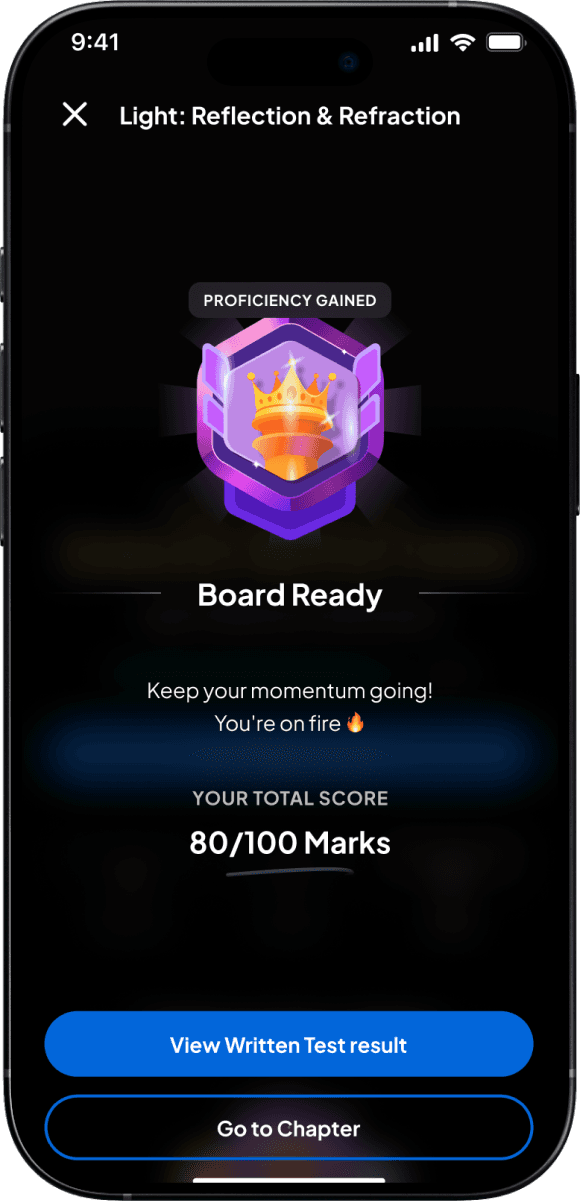
Based on the marks for both MCQ and Written, user gets a Proficiency Badge
Motivation through Gamification
We designed a positive reward loop system focused on habit formation, effort validation, and psychological safety:
Streaks: Tracks consecutive active days with evolving visual themes to celebrate long-term commitment.

Earn streaks after completing any 1 task each day.
Earn badges based on number of streaks

Social & Achievement Dashboard: Personal milestone badges (consistency, mastery, completion) alongside peer rankings based strictly on streak longevity and syllabus progress, normalizing effort and healthy competition.
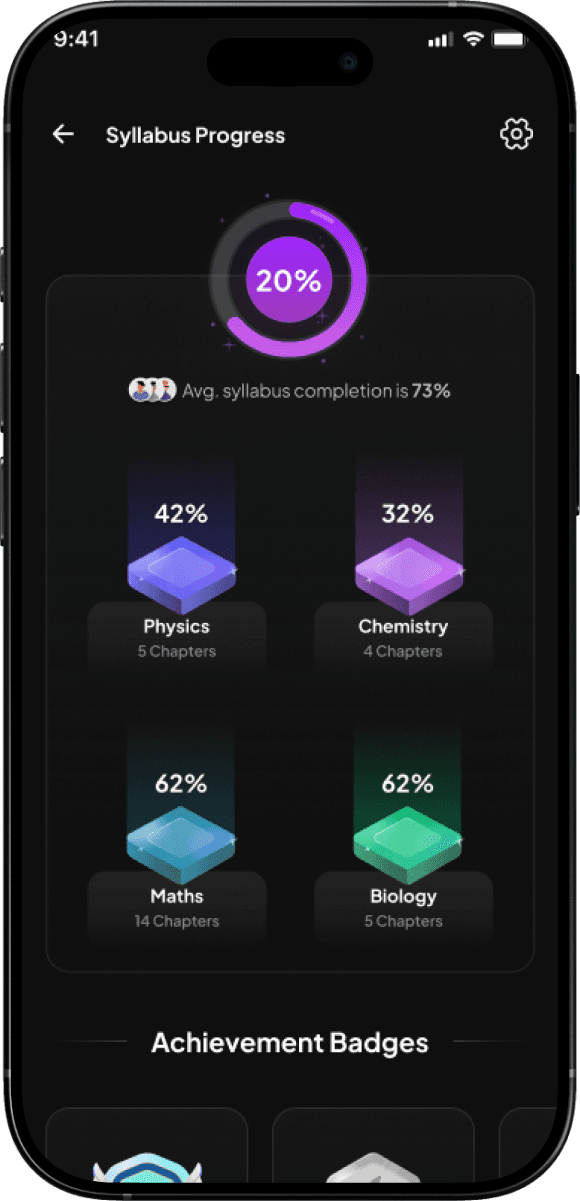

Transparent Parent Reports: To relieve parents' anxiety of "flying blind," we designed a bi-weekly reporting interface specifically for them, replacing raw test scores and vague praise with diagnostic clarity and actionable next steps:
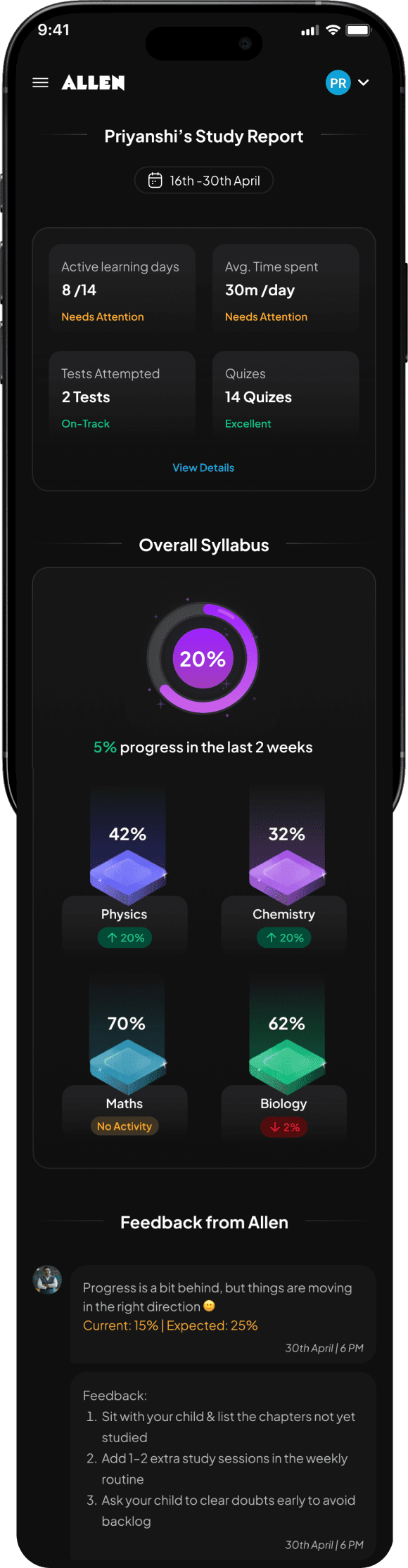

Detailed report to check Time spent, Test and Quiz performance.

Detailed topic wise report.
Feedback for parents to improve their child’s performance.
Validation
Tested with 428 students before launch
Two-stage pilot · Sikar, Patna, Gwalior, Raipur · Class 9–10 · sub 60% to 90% scorers
90%
overall satisfaction
70%
found it easier than what they usually watch
68%
preferred the Story + Teacher format
Three things the pilot pushed back on:
8%
flagged over-cartoonification → visual tone matured: engaged teenager, not primary school
21%
felt pacing was slow → concept videos capped at 5–10 minutes
#1 ask
"more questions mid-video, not at the end" → killed end-of-video quizzes, kept inline pop-ups
Impact Post Launch
91%
active learners (started at least 1 activity)
784
focused mins / active user / month
75
NPS
They were never
average but
The system was.
Eureka didn't make students smarter. It stopped requiring them to
already be disciplined, confident, and self-driven before learning
could begin.
Key Takeaways
Behavioral Focus & Content-First:
The challenge was consistency, confidence, and motivation, not academics; story-first content drives engagement, gamification rewards it.
Design for Simplicity:
A choice-paralyzed student needs zero decision points: one CTA, auto-advancing flow.
Psychological Safety:
Assessment that can gate without ever punishing changes how students approach being tested.
Clarity through Narrative:
Use a Story-first, Two-Layer Content structure to build intuitive understanding via real-life examples before introducing technical depth.


That’s a wrap!

Please view in
desktop for now

Please view in
desktop for now
